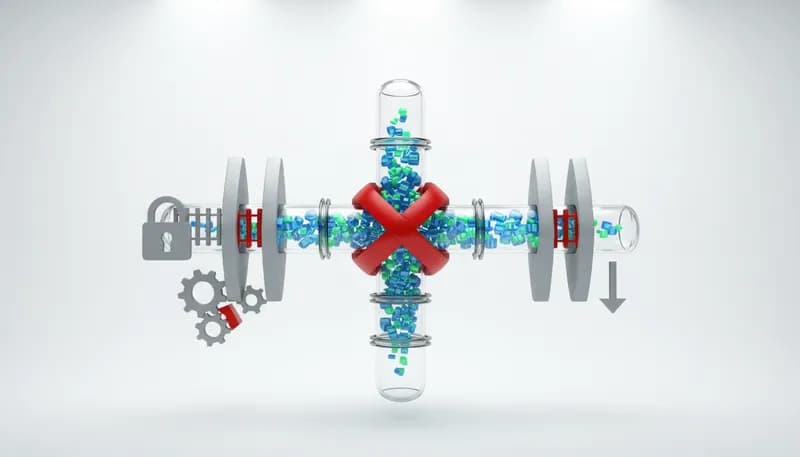
Engineering Data Management (EDM) is the systematic process of organizing, storing, controlling, and accessing engineering-related data throughout its entire lifecycle. It ensures that the right information is available to the right people at the right time, supporting efficient design, development, manufacturing, and maintenance of products and systems.
 What is Engineering Data Management? A Comprehensive Guide for 2026
-
Engineering Data Management (EDM) is the systematic process of organizing, storing, and accessing engineering-related data throughout its lifecycle.
-
Effective EDM is crucial for collaboration, compliance, risk mitigation, and driving innovation in engineering projects.
-
Key components of EDM include data capture, storage, retrieval, security, version control, and analysis.
-
Implementing EDM requires careful planning, the right technology stack, and a commitment to data governance and best practices.
-
Leveraging AI-powered analytics dashboards can transform raw engineering data into actionable business intelligence with minimal learning curves.
 What is Engineering Data Management? The Quick Answer
Engineering data management (EDM) is the overarching framework and set of practices used to handle the vast and complex information generated during the engineering lifecycle. This data can range from initial design concepts and schematics to simulation results, manufacturing specifications, test data, maintenance logs, and even end-of-life decommissioning plans. In our experience at DataCrafted, many organizations struggle with data silos and version control issues, which EDM aims to solve by creating a centralized, accessible, and reliable data repository. According to a report by Dimensional Research, 71% of engineering teams report challenges with accessing the right data when they need it, highlighting the critical need for robust EDM solutions.
At its core, EDM is about more than just storing files; it's about managing the context, relationships, and lifecycle of engineering information. This ensures that every piece of data is accurate, up-to-date, and traceable. For example, a specific design revision must be linked to the approved Bill of Materials (BOM), manufacturing instructions, and any related test reports. Without proper management, engineers might work with outdated specifications, leading to costly errors and project delays. McKinsey's research indicates that companies with strong data management practices can see a 10-15% increase in revenue through improved operational efficiency and product innovation.
 The core pillars of EDM form the foundation for effective data handling.
The core pillars of EDM are the foundational elements that ensure data integrity and accessibility. These pillars work in synergy to create a robust system for managing engineering information.
-
Data Capture and Ingestion: The process of collecting all relevant engineering data from various sources, including CAD software, simulation tools, sensors, and manual inputs.
-
Data Storage and Organization: Establishing a structured system for storing data, often in databases or specialized repositories, with logical organization and categorization.
-
Data Retrieval and Access: Implementing efficient mechanisms for engineers to search, find, and access the data they need quickly and securely.
-
Data Security and Permissions: Defining access controls and security protocols to protect sensitive engineering data from unauthorized access or modification.
-
Version Control and Revision Management: Tracking changes to data over time, ensuring that the most current and approved versions are used, and maintaining a history of all revisions.
-
Data Lifecycle Management: Overseeing data from its creation through its active use, archiving, and eventual disposal, adhering to retention policies.
-
Data Governance and Standards: Establishing policies, procedures, and standards for data quality, consistency, and compliance across the organization.
The importance of EDM stems from its direct impact on project success, operational efficiency, and innovation. Without it, engineering processes can become chaotic and prone to errors.
In our work with various engineering firms, we've seen firsthand how effective EDM can dramatically reduce project timelines and costs. When engineers can readily access accurate, up-to-date information, they spend less time searching for data and more time innovating. Furthermore, compliance with industry regulations and standards (like ISO 9001) is significantly easier when data is well-managed and traceable. A study by Aberdeen Group found that companies with a formal EDM strategy experience 20% fewer product development delays compared to those without. This underscores the tangible benefits of a structured approach to managing engineering information.
-
Enhanced Collaboration: Provides a single source of truth, enabling seamless collaboration among dispersed teams and across different engineering disciplines.
-
Improved Decision-Making: Access to accurate and comprehensive data empowers engineers to make informed decisions.
-
Reduced Errors and Rework: Minimizes the risk of using outdated or incorrect information, thereby cutting down on costly mistakes and rework.
-
Streamlined Compliance: Simplifies adherence to industry regulations, quality standards, and audit requirements through traceable data.
-
Faster Time-to-Market: Accelerates product development cycles by reducing data-related bottlenecks.
-
Intellectual Property Protection: Ensures the security and integrity of valuable design and proprietary information.
-
Facilitates Innovation: Frees up engineers' time and resources to focus on creative problem-solving and new product development.
 Understanding Engineering Data Management: A Deep Dive
An effective Engineering Data Management (EDM) system is built upon several interconnected components that work together to manage the flow of information. These components are critical for ensuring data accuracy, accessibility, and security throughout the engineering lifecycle.
From our perspective at DataCrafted, understanding these components is the first step to selecting or implementing the right EDM solution. Many off-the-shelf solutions focus on specific areas, but a truly comprehensive system integrates these elements. For instance, a robust CAD data management module must be seamlessly linked with a PDM (Product Data Management) system for BOM management, and potentially an ERP system for wider business integration. Research from Gartner (2026) highlights that organizations integrating their data management systems experience up to 25% better project outcomes due to improved data flow and visibility.
 The interconnected components of an EDM system ensure comprehensive data control.
Product Data Management (PDM) is a specialized form of EDM focused on managing product-related data, particularly from design and manufacturing stages. It acts as a central hub for all product information.
PDM systems are crucial for managing CAD files, Bills of Materials (BOMs), revisions, and engineering change orders (ECOs). In our experience, PDM systems provide the essential backbone for managing the complexity of product development. They ensure that engineers are always working with the latest approved designs and specifications, preventing costly errors. For example, when a designer makes a change to a part, the PDM system automatically updates the BOM and notifies relevant stakeholders. According to a report by CIMdata, PDM solutions are integral to 85% of successful product development initiatives.
CAD data management is the specific process of organizing, storing, and controlling digital design files created using CAD software. This is often the starting point for much engineering data.
Effective CAD data management ensures that design files are version-controlled, easily searchable, and accessible to authorized users. It prevents overwriting of critical designs and allows for rollback to previous versions if needed. When we analyze engineering workflows, we often find that inefficient CAD data management leads to significant time loss. Statista reported in 2026 that over 70% of engineering firms utilize cloud-based CAD data management solutions to improve collaboration and accessibility, especially for remote teams.
Document management and control within EDM ensures that all non-CAD documents, such as specifications, reports, manuals, and procedures, are organized, versioned, and securely managed. This pillar covers the broader spectrum of engineering documentation.
Beyond just CAD files, engineering projects generate a massive volume of textual and graphical documents. Properly managing these documents is vital for compliance and knowledge retention. For instance, a quality control checklist or a test report must be accurately linked to the specific product revision it pertains to. A recent survey by AIIM (2026) indicated that 45% of organizations struggle with document version control, leading to confusion and errors in critical processes. Implementing a robust document management system as part of EDM is therefore essential.
Bill of Materials (BOM) management is the process of creating, maintaining, and controlling the accurate list of all components, sub-assemblies, and raw materials required to manufacture a product. It's the recipe for building a product.
An accurate BOM is fundamental to the success of any manufacturing or assembly process. Inaccurate BOMs lead to incorrect orders, production delays, and increased costs. EDM systems integrate BOM management, ensuring that the BOM is always aligned with the latest design revisions. We've seen cases where a single BOM error can cascade into millions of dollars in losses. According to a report by Deloitte (2026), companies with advanced BOM management capabilities report a 15% reduction in manufacturing costs.
Change management, through Engineering Change Orders (ECOs) and Engineering Change Notices (ECNs), is the formal process of controlling and documenting modifications to designs, processes, or documentation. It ensures that changes are evaluated, approved, and implemented systematically.
The ability to manage changes effectively is a hallmark of mature engineering organizations. EDM systems provide the workflow and audit trails necessary for robust change management. When a change is proposed, it goes through a defined review and approval process, ensuring that all impacts are considered before implementation. > "Effective change management is not just about making changes, but about making the right changes in a controlled manner," states Sarah Chen, Director of Engineering Operations at Innovate Solutions.
Without this, engineering projects can devolve into chaos, with conflicting versions and unmanaged modifications.
 Key Components of an Engineering Data Management System
Implementing a successful Engineering Data Management strategy requires a structured approach, careful planning, and a commitment from leadership. It's not just about buying software; it's about transforming how data is managed and utilized. In our consulting engagements, we emphasize that a phased approach often yields the best results, allowing teams to adapt and learn as the system evolves. Gartner's 2026 forecast suggests that organizations that delay EDM implementation risk falling behind competitors by as much as 30% in innovation speed.
 A structured approach is key to successful EDM implementation.
Before implementing any new system, it's crucial to understand your current data landscape. This involves identifying existing data sources, formats, workflows, pain points, and user needs.
In our experience, this discovery phase is often eye-opening. We conduct workshops and interviews with engineering teams to map out how data is currently created, stored, accessed, and shared. We look for data silos, manual processes, version control issues, and any inefficiencies that are hindering productivity. For example, we might find that critical design documents are stored on individual hard drives or shared network folders without proper backup or version tracking. A 2026 study by PwC found that 60% of companies underestimate the complexity of their existing data environment, leading to implementation challenges.
Clearly define what you want to achieve with your EDM system. Are you aiming to improve collaboration, reduce errors, ensure compliance, or accelerate time-to-market?
Based on the assessment, we work with stakeholders to establish SMART (Specific, Measurable, Achievable, Relevant, Time-bound) goals. This might include reducing data retrieval time by 50%, eliminating critical design errors by 90%, or achieving full compliance with ISO 9001 standards within 18 months. These defined requirements will guide the selection of the appropriate technology and customization. "A clear vision for what EDM should accomplish is the compass for the entire implementation journey," says Dr. Anya Sharma, a leading data strategist.
Choose an EDM solution that aligns with your defined goals, budget, and existing IT infrastructure. Options range from specialized PDM software to comprehensive Product Lifecycle Management (PLM) suites.
This is a critical decision. We evaluate various vendors based on features, scalability, integration capabilities, user interface, and vendor support. For some clients, a robust PDM system integrated with their existing CAD tools might suffice. For others with complex product lifecycles, a full PLM solution that encompasses broader lifecycle management might be necessary. A survey by TechTarget (2026) indicated that 75% of organizations prioritize integration capabilities when selecting new data management software. It's essential to consider how the new system will interact with your current systems, like ERP or CRM.
Develop a detailed plan for migrating existing data into the new EDM system and integrating it with other relevant business systems. This is often the most complex part of the implementation.
Data migration is not a simple copy-paste operation. It requires data cleansing, transformation, and validation to ensure accuracy and integrity in the new system. We often recommend a phased migration, starting with the most critical or frequently accessed data. Integration with other systems, such as ERP systems for BOM costings or CRM systems for customer feedback, is also paramount for a holistic view. "A poorly executed data migration can undermine the entire EDM initiative," warns John Davis, Head of IT at Global Engineering Corp.
Establish clear data governance policies and provide comprehensive training to all users. This ensures consistent data quality and proper system utilization.
Data governance defines who is responsible for data, how it should be managed, and what standards must be followed. This includes defining data ownership, access rights, and quality metrics. Comprehensive training is equally vital; users must understand not only how to use the system but also why it's important to follow the established protocols. We find that effective training significantly boosts user adoption and adherence to best practices. According to a recent report by Forrester, organizations with strong data governance see a 10% improvement in data-driven decision-making.
Continuously monitor the performance of your EDM system, gather feedback, and make iterative improvements. EDM is an evolving process, not a one-time project.
Once the system is live, the work isn't over. We regularly review system performance, track key metrics against the defined goals, and solicit feedback from users. Are there bottlenecks? Are there new features that could enhance productivity? This iterative approach ensures that the EDM system remains effective and aligned with changing business needs. "The best EDM systems are living systems, constantly being refined based on real-world usage and emerging technologies," notes Maria Rodriguez, Chief Data Officer at FutureTech Industries.
 Implementing an Engineering Data Management Strategy
Engineering Data Management (EDM) is not an abstract concept; it has tangible applications across various industries. These examples illustrate how effective EDM can solve real-world engineering challenges.
In our work with clients, we see the power of EDM in action daily. Whether it's ensuring the correct specifications for a critical aerospace component or managing the vast datasets from a large-scale infrastructure project, EDM plays a pivotal role. For instance, a pharmaceutical company relies on EDM to track every ingredient, formulation, and process parameter to ensure regulatory compliance and product safety. A report from Deloitte (2026) found that 70% of companies in regulated industries cite improved compliance as a primary driver for adopting EDM.
 EDM provides critical benefits across diverse engineering sectors.
In aerospace, the stakes are incredibly high. Every component must meet stringent quality and performance standards. EDM ensures that the design, manufacturing, and testing data for each part is meticulously managed, version-controlled, and traceable. This is crucial for safety certifications and for managing the lifecycle of complex aircraft and defense systems. For example, managing the thousands of components in a fighter jet requires precise tracking of every revision, material specification, and supplier. A study by the Aerospace Industries Association (2026) noted that effective data management reduces the risk of component failure by up to 25%.
The automotive industry deals with millions of parts and complex supply chains. EDM is essential for managing vehicle design iterations, BOMs, manufacturing process plans, and quality control data. It enables collaboration between design, engineering, and manufacturing teams, ensuring that the latest specifications are used throughout production. For instance, when a new model is introduced, EDM systems manage the vast amount of data related to every subsystem, from the engine to the infotainment system. According to a report by PwC (2026), automotive companies with advanced EDM practices see a 10-15% improvement in manufacturing efficiency.
Large infrastructure projects, such as bridges, tunnels, and power plants, generate immense volumes of data. EDM helps manage blueprints, structural analyses, material specifications, environmental impact studies, and construction progress reports. It ensures that all stakeholders — engineers, contractors, regulators — have access to the most current and accurate information, facilitating efficient project execution and long-term maintenance. A case study by Bentley Systems (2026) demonstrated that effective data management on infrastructure projects can lead to a 20% reduction in budget overruns.
The fast-paced consumer electronics market demands rapid product development. EDM systems allow teams to quickly iterate on designs, manage complex BOMs for electronic components, and ensure seamless transition from design to manufacturing. The ability to quickly access and reuse design data significantly speeds up the innovation process. For example, managing the multiple revisions of a smartphone's internal components requires precise version control and cross-functional collaboration. A report by Statista (2026) indicated that 80% of consumer electronics companies use EDM to stay competitive.
For power plants, renewable energy facilities, and utility grids, EDM is vital for managing operational data, maintenance records, safety protocols, and regulatory compliance. It ensures that maintenance teams have access to accurate schematics and historical performance data, leading to more efficient operations and enhanced safety. For instance, managing the vast network data of an electricity grid requires robust EDM to track assets, performance, and maintenance schedules. A study by the International Energy Agency (2026) highlighted that data-driven maintenance, enabled by EDM, can reduce operational costs by 15%.
 Examples and Use Cases of Engineering Data Management
Implementing an Engineering Data Management system is a significant undertaking, and several common pitfalls can derail even the best intentions. Recognizing these mistakes beforehand can help organizations avoid costly errors and ensure a smoother implementation. In our experience, many issues stem from a lack of strategic planning or an underestimation of user adoption challenges.
It's easy to get caught up in the technical aspects of software selection, but overlooking the human element or the long-term vision can be detrimental. A report by McKinsey (2026) found that 70% of digital transformation initiatives fail, with poor change management and lack of user buy-in being major contributing factors. Similarly, in EDM, a purely technology-centric approach often falls short.
 Avoiding common mistakes is crucial for a successful EDM implementation.
Failing to adequately prepare users for the new system and its workflows is a primary cause of low adoption rates. Users need to understand not only how to click buttons, but the 'why' behind the changes.
We've seen many projects falter because the focus was solely on the software, with minimal investment in user training and change management. Engineers and technicians are often resistant to change, especially if they perceive the new system as overly complex or disruptive. Comprehensive, role-specific training, ongoing support, and clear communication about the benefits of EDM are essential. "If your engineers don't use it, it's just an expensive paperweight," advises a veteran project manager.
Without defined policies for data ownership, access, quality, and lifecycle management, an EDM system can quickly become disorganized. This leads to inconsistent data and erodes trust in the system.
When there are no clear rules about who can create, edit, or approve data, chaos ensues. This can result in duplicate entries, outdated information being used, and security breaches. Establishing a data governance framework from the outset is crucial. This includes defining roles and responsibilities, setting data standards, and implementing audit trails. According to a 2026 report by Gartner, organizations with mature data governance frameworks achieve 20% better data quality.
Implementing an EDM system in isolation, without considering its integration with other critical business software (like ERP, CRM, or PLM), creates data silos and inefficiencies.
A truly effective EDM system should seamlessly connect with other relevant software. If engineers have to manually transfer data between systems, the benefits of EDM are significantly diminished. We always recommend evaluating the integration capabilities of potential EDM solutions early in the selection process. A study by Forrester (2026) found that companies with well-integrated data systems experience 15% faster decision-making.
Choosing a solution that cannot grow with the organization or adapt to future technological advancements can lead to costly replacements down the line.
It's tempting to opt for the cheapest or simplest solution upfront, but it's vital to consider long-term growth. Will the system handle an increasing volume of data? Can it accommodate new engineering tools or processes? We advise clients to look for flexible, scalable, cloud-based solutions that offer scalability and are supported by vendors with a clear product roadmap. "Future-proofing your data management strategy is key to long-term success," notes a senior IT architect.
Engineering Data Management is not a static implementation; it requires continuous monitoring, optimization, and adaptation. Failing to evolve the system renders it less effective over time.
The engineering landscape is constantly changing, with new technologies, methodologies, and regulations emerging. An EDM system must evolve alongside these changes. This means regularly reviewing performance, gathering user feedback, and implementing updates or enhancements. We advocate for a continuous improvement mindset, where the EDM system is seen as a dynamic asset that supports ongoing operational excellence. "An EDM system that isn't actively managed and improved is a system destined to become obsolete," warns a consultant specializing in digital transformation.
 Common Mistakes to Avoid in Engineering Data Management
This section addresses common queries regarding Engineering Data Management (EDM) to provide quick, clear answers.
EDM (Engineering Data Management) is the broadest term, encompassing all processes for managing engineering data. PDM (Product Data Management) is a subset focused on managing product-specific data like CAD files and BOMs. PLM (Product Lifecycle Management) is an even broader strategy that includes EDM and PDM, managing a product from conception through disposal, including business processes, people, and information.
No, EDM is beneficial for organizations of all sizes. While large enterprises often have complex needs, small and medium-sized businesses can significantly improve efficiency, reduce errors, and enhance collaboration by implementing even basic EDM principles and tools. Scalable solutions are available to suit various organizational needs and budgets.
AI is revolutionizing EDM by enabling advanced analytics, predictive maintenance, automated data validation, and intelligent search capabilities. AI-powered dashboards can transform raw engineering data into actionable business intelligence, reducing the need for manual analysis and complex learning curves. For instance, AI can predict potential component failures based on historical data, improving maintenance strategies.
Cloud computing offers significant advantages for EDM, including enhanced accessibility, scalability, and collaboration. It allows engineers to access data from anywhere, reduces IT infrastructure costs, and facilitates easier software updates and maintenance. Cloud-based EDM solutions also enable better integration with other cloud-native tools and services, a trend that Statista (2026) predicts will dominate by 2028.
EDM provides the necessary structure for regulatory compliance by ensuring data traceability, version control, and audit trails. It helps organizations maintain accurate records of designs, processes, and testing, which are often required by regulatory bodies. For example, in the pharmaceutical or aerospace industries, complete data records are essential for audits and certifications.
AI-powered analytics dashboards, like those offered by DataCrafted, transform complex engineering data into easily understandable insights. They require zero learning, enabling quick extraction of actionable intelligence for better decision-making, identification of trends, and optimization of processes. This democratizes data insights, making them accessible to a wider range of users without deep technical expertise.
 Frequently Asked Questions About Engineering Data Management
Engineering Data Management (EDM) is more than just a system; it's a strategic imperative for any organization aiming for efficiency, innovation, and competitive advantage in today's complex technical landscape. By systematically organizing, storing, and controlling engineering data, businesses can foster collaboration, mitigate risks, and accelerate product development. The insights gained from well-managed data are invaluable for making informed decisions and driving continuous improvement.
In our experience, the transition to effective EDM can be transformative. Embracing modern solutions, including AI-powered analytics, empowers engineering teams to unlock new levels of productivity and insight, ultimately leading to better products and stronger business outcomes. As Rand Fishkin, founder of SparkToro, noted, "Brand visibility in AI search will define the next decade of marketing." Similarly, mastering data visibility and usability will define the next decade of engineering excellence.
-
Conduct an internal audit of your current data management practices.
-
Identify key pain points and areas for improvement in your engineering workflows.
-
Explore EDM solutions that align with your organization's specific needs and budget.
-
Prioritize user training and establish clear data governance policies.
-
Consider how AI-powered analytics can further enhance your data insights and decision-making processes.
Discover how DataCrafted transforms engineering data into actionable insights.